
Most of the emulsion on Britain's walls is held together by plastic. The binder in conventional wall paint, the ingredient that glues pigment to the wall, is usually an acrylic, vinyl or styrene-acrylic polymer. Once the water evaporates, what's left is a thin film of coloured plastic.
That film doesn't stay put forever. It wears, gets scrubbed, scuffed, sanded and repainted, and tiny fragments come away as dust and rinse water. One 2022 study by the Swiss consultancy Environmental Action estimated that paint is the single largest source of microplastics reaching the ocean, at around 58% of the total. Industry bodies dispute that figure, but nobody disputes that conventional paint films are plastic.
"Water-based" doesn't mean plastic-free
Water-based simply means the paint is thinned with water rather than solvent. Almost every water-based emulsion still uses a plastic binder. The water evaporates; the plastic stays on your wall.
How to check the label
Look at the safety data sheet or ingredients list for any of these words:
- acrylic, acrylate or styrene-acrylic
- vinyl, vinyl acetate, VAE or PVA
- "polymer dispersion" or "synthetic resin binder"
If you see one of them, the paint film is plastic, whatever the tin says about being eco or natural. Genuinely plastic-free paints use other binders, such as lime, clay, silicate, linseed oil or plant-based binders.
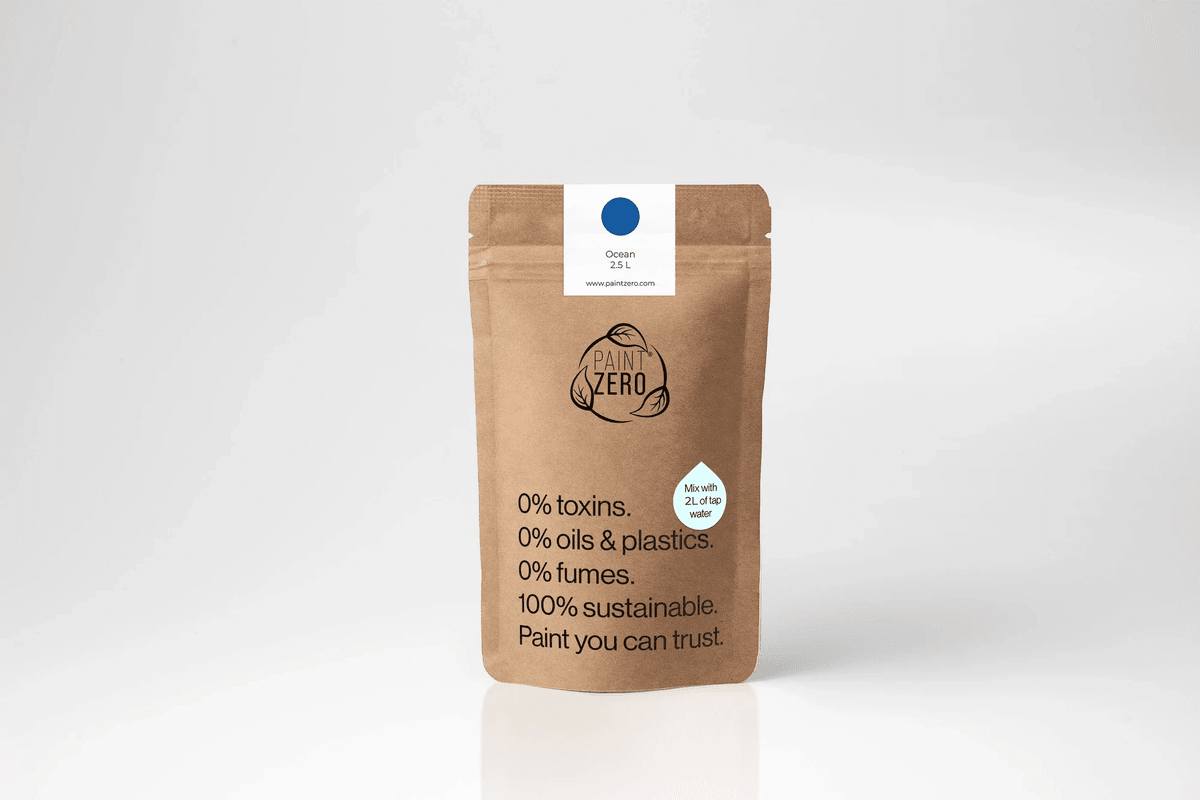
What Paint Zero uses instead
Paint Zero's binder is made from plant proteins, starches and gums, combined with natural minerals and pigments. It contains no acrylics, vinyls or other synthetic polymers, so there is no plastic film to shed. The formulation is protected by UK patent GB2628101B.
It also arrives as a dry powder rather than in a tin. You mix the 750 g pouch with 2 litres of warm tap water to make 2.5 litres of matt wall and ceiling paint, enough for 25–30 m². The pouch is home-compostable, so there's no plastic tub to throw away either.
Check your own walls
Not sure what's on your walls already? Our free DIY microplastics audit takes 5–10 minutes per room and shows where painted surfaces are wearing.
Quick answers
- Is acrylic paint plastic? Yes. Acrylic is a plastic polymer; acrylic emulsion dries to a plastic film.
- Is eco paint always plastic-free? No. Many "eco" or low-VOC paints still use acrylic binders. Check the ingredients.
- Is plastic-free paint as good? Paint Zero gives over 98% opacity and a breathable, vapour-permeable matt finish.
Source: Environmental Action, "Plastic Paints the Environment" (2022), as reported by the World Economic Forum.